If you're researching garage floor coatings, you've likely come across both epoxy and polyurea options. While many homeowners search for "epoxy garage floors," there's a superior alternative that outperforms epoxy in every way. Here's what you need to know about polyurea vs. epoxy.
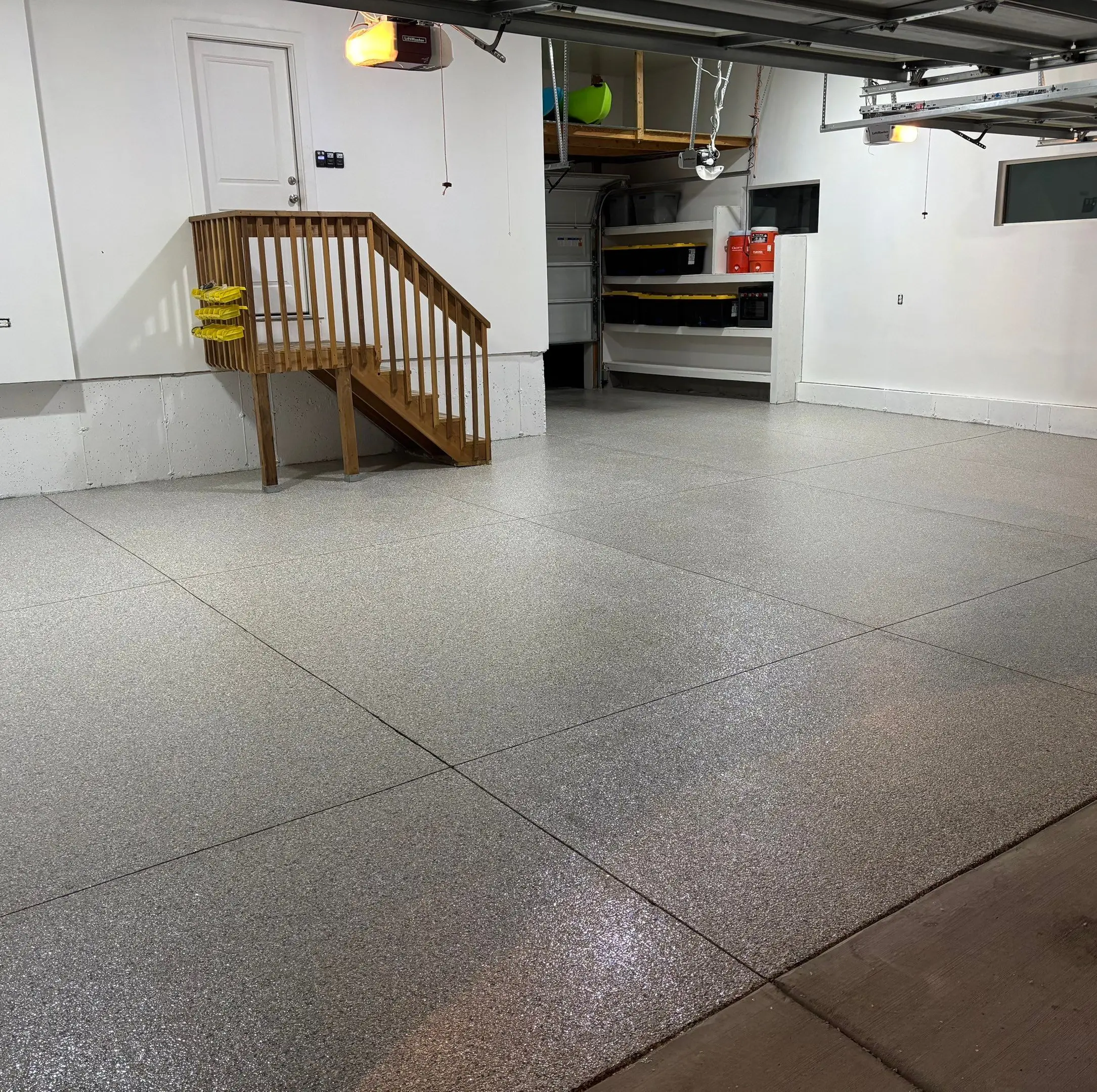
| Feature | Polyurea (Penntek) | Epoxy |
|---|---|---|
| Strength | 4× stronger than epoxy | Standard strength |
| Flexibility | Flexible, moves with concrete | Rigid, brittle |
| Cure Time | 1 day installation | 3-7 days |
| Moisture Resistance | Superior adhesion | Moisture-sensitive |
| UV Stability | No yellowing or fading | Yellows in sunlight |
| Hot-Tire Pickup | Resistant | Prone to lifting |
| Warranty | Lifetime warranty | Limited warranty |
1. Strength & Longevity
Polyurea is built to last.
Polyurea (Penntek®): Industrial-grade strength designed for garages, shops, commercial spaces, and high-traffic areas. It's 4× stronger than epoxy.
Epoxy: Prone to chipping, peeling, and hot-tire pickup over time.
Why it matters: Your floor stays bonded to the concrete instead of failing prematurely. While epoxy may seem like a cost-effective option initially, polyurea's superior durability means you won't need costly repairs or replacements down the road.
2. Flexibility & Crack Resistance
Concrete moves—polyurea moves with it.
Polyurea: Flexible and impact-resistant, allowing it to expand and contract with temperature changes without cracking or delaminating.
Epoxy: Rigid and brittle; cracks telegraph through the coating, creating an unsightly appearance and potential failure points.
Why it matters: Utah's freeze-thaw cycles destroy rigid coatings. Our harsh winters and hot summers cause concrete to expand and contract. Polyurea's flexibility means your floor coating adapts to these changes, while epoxy's rigidity leads to cracks and failures.
✓ Polyurea Advantage
Handles temperature changes from -20°F to 120°F without cracking or delaminating.
✗ Epoxy Problem
Rigid structure causes cracks to appear as concrete expands and contracts with seasons.
3. Cure Time & Downtime
As little as one-day installation.
Polyurea: Walk on it within hours, park vehicles in 24 hours. Most residential garage floors are completed in a single day.
Epoxy: Multi-day process with extended cure times, often requiring 3-7 days before you can fully use your garage.
Why it matters: Less disruption to your home or business. With polyurea, you can have your garage floor transformed and ready to use almost immediately, minimizing the inconvenience of having your garage out of commission.
1 Day
Polyurea Installation
Ready to use the next day
3-7 Days
Epoxy Installation
Extended downtime required
4. Moisture & Adhesion
Better bond = better performance.
Polyurea: Superior adhesion even in variable moisture conditions. It bonds effectively to concrete even when moisture levels aren't perfect.
Epoxy: Moisture-sensitive; common cause of peeling and delamination. Epoxy requires perfectly dry conditions to adhere properly.
Why it matters: Most epoxy failures are moisture-related. In Utah, where basements and garages can have varying moisture levels, polyurea's superior adhesion means a more reliable installation and longer-lasting results.
5. UV Stability & Appearance
No yellowing. No fading.
Polyurea: UV-stable topcoats prevent discoloration, maintaining its color and gloss for years, even in direct sunlight.
Epoxy: Yellows and fades when exposed to sunlight, losing its attractive appearance over time.
Why it matters: Your floor keeps its color and gloss for years. If your garage has windows or you want to show off your beautiful floor, polyurea maintains its appearance while epoxy will yellow and fade, especially in areas with natural light.
✓ Polyurea: UV Stable
- ✓ Maintains color for years
- ✓ No yellowing
- ✓ Gloss retention
- ✓ Perfect for garages with windows
✗ Epoxy: UV Sensitive
- ✗ Yellows over time
- ✗ Fades in sunlight
- ✗ Loses gloss
- ✗ Poor for bright garages
The Bottom Line: Polyurea is the Clear Winner
While many homeowners search for "epoxy garage floors," polyurea (specifically Penntek polyurea coatings) offers superior performance in every category. At Hardy Surface Co., we use only Penntek polyurea systems because we believe in providing our customers with the best possible product—one that will last a lifetime with proper care.
Frequently Asked Questions
Ready to Choose Polyurea for Your Garage Floor?
If you're considering epoxy garage floors, we'd love to show you why polyurea is the better choice. Our Penntek polyurea coatings come with a lifetime warranty and can be installed in just one day.